

- A small research discovered that decreasing ultra-processed meals (UPF) consumption was related to enhancements in despair signs.
- The findings add to earlier analysis linking excessive UPF consumption with an elevated threat of despair.
- Researchers are investigating how elements equivalent to vitamin, irritation, metabolic well being, and the gut-brain axis might hyperlink UPFs with temper.
Rising analysis has linked excessive consumption of ultra-processed meals (UPFs) with an elevated threat of despair. Now, a small research printed September 23 in
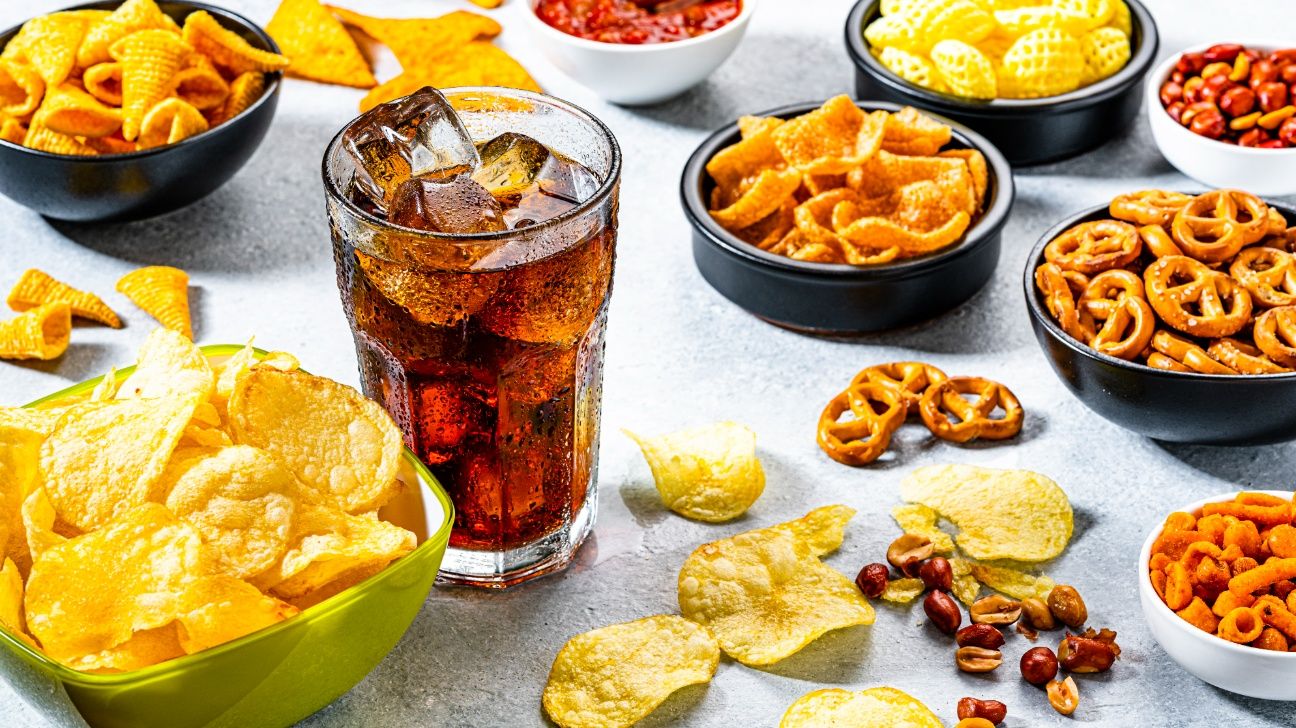
There is no such thing as a universally accepted definition of UPFs. Nevertheless, a extensively used classification system referred to as NOVA defines them as industrial formulations made primarily from substances extracted or derived from meals, usually with components not usually utilized in dwelling cooking. Examples embody mushy drinks, packaged snacks, sweet, sausages, sizzling canines, and pastries.
Earlier research has linked UPFs to an elevated threat of despair, anxiousness, eating disorders, and different psychological well being circumstances. Within the new research, members lowered their UPF consumption by greater than 85% and had considerably decrease depression scores throughout three customary measures whereas following the low-UPF weight loss program.
This small research included 20 members who:
The members additionally needed to agree to not change medicines, remedy, train, or sleep through the research.
Of the 20 members enrolled within the research, 19 accomplished it. The typical age was 44. Contributors adopted each their normal weight loss program and a low-UPF weight loss program throughout separate phases of the research, with the order randomly assigned.
Contributors usually discovered the low-UPF weight loss program acceptable and manageable. In addition they had decrease despair and anxiousness scores through the low-UPF weight loss program section in contrast with their normal weight loss program.
On one generally used despair measure, the PHQ-9, common scores declined from 8.68 through the normal weight loss program section to five.53 through the low-UPF section.
The research had a number of limitations, together with its small pattern dimension, reliance on self-reported dietary information, and uncertainty about which elements of decreasing UPFs might have contributed to the adjustments in signs.
The researchers additionally stated that bigger research are wanted to find out whether or not decreasing UPF consumption can enhance despair signs.
Michelle Routhenstein, Preventive Cardiology Dietitian at Totally Nourished, who wasn’t concerned within the research, agreed, noting that extra analysis is required to grasp whether or not decreasing UPFs immediately improves despair signs or whether or not different elements of the general weight loss program could also be contributing to the noticed profit.
Dara Houp, PsyD, a licensed scientific psychologist with Pathways Psychological Providers in NYC, who wasn’t concerned within the research, advised Healthline that it’s essential to tell apart ultra-processed meals from processed meals extra broadly.
Routhenstein agreed that the excellence is essential. “Processing shouldn’t be inherently adverse. Many nutritious meals are processed ultimately.”
“I might not encourage individuals to easily label a meals as ‘processed’ or ‘unprocessed’ and make choices primarily based on that label alone. I want to take a look at the general dietary sample, the dietary worth of the meals, and what function that meals performs within the weight loss program. A packaged meals can nonetheless present significant vitamins and be a part of an total nutritious consuming sample,” she stated.
There are numerous proposed mechanisms for the way UPFs might have an effect on temper.
For instance, UPFs are often low in fiber, nutritional vitamins, and minerals, which might play essential roles in mind well being.
Houp famous that some substances present in UPFs, together with synthetic sweeteners equivalent to aspartame, might affect the intestine microbiome.
“Our intestine is a major location for producing neurotransmitters, chargeable for manufacturing the overwhelming majority – upward of 90% – of our physique’s serotonin. When the intestine microbiome is disrupted, it immediately interferes with wholesome neurotransmitter manufacturing,” she stated.
Houp added that diets excessive in UPFs could also be decrease in antioxidant-rich meals, equivalent to fruit and veggies, which may contribute to oxidative stress. Research suggests that folks with despair might have decrease antioxidant ranges and better markers of oxidative injury.
Lowering your UPF consumption can begin with small, sustainable adjustments.
Routhenstein instructed beginning by wanting on the meals you eat most frequently somewhat than making an attempt to overtake your kitchen.
“Establish one or two meals which might be frequent sources of UPFs and think about what you might realistically change them with. For instance, you would possibly swap a every day sugary drink for water or glowing water, or select fruit, nuts, yogurt, or one other minimally processed choice instead of a packaged snack,” she stated.
Different methods you may assist cut back UPFs embody:
- Prepare dinner at dwelling, utilizing entire substances when attainable.
- When attainable, select meals with fewer extremely processed substances.
- Construct meals round entire meals, like fruits, greens, grains, and lean proteins.
Routhenstein added that you just don’t should remove comfort out of your weight loss program. Frozen greens, canned beans, canned fish, oats, plain yogurt, tofu, and different minimally processed meals could make wholesome consuming way more sensible.
“The objective is to not eat a wonderfully unprocessed weight loss program. It’s to regularly shift the general sample towards extra nutrient-dense meals that present fiber, protein, wholesome fat, nutritional vitamins, and minerals,” she stated.